Pease Pottage 01403 275 276
Petersfield 01730 777 350
Maidstone 01795 843 866
Cullompton 01884 211 788

10 Best Corrugated Pipe Types for Global Buyers?

Choosing the right corrugated pipe requires more than comparing prices and outer diameters. Global buyers must connect product design with soil conditions, water flow, installation methods, and project risk. This guide examines ten widely used corrugated pipe types, including drainage, culvert, electrical conduit, irrigation, and double-wall designs. Each type serves a different purpose. Some prioritize flexibility, while others provide greater stiffness or chemical resistance. The details matter.

Real sourcing experience shows that small differences can affect total project cost. A thinner wall may simplify handling but reduce load capacity. A larger diameter may improve flow but increase transport expenses. Buyers should review material grades, ring stiffness, connection systems, temperature limits, and tested performance. They should also request clear technical documents from qualified manufacturers. Standards vary between markets, so one specification should never be treated as universal.

That assumption can fail.

The following overview is designed for engineers, distributors, contractors, and procurement teams. It compares practical strengths, limitations, and common applications without hiding trade-offs. For example, HDPE pipe often handles corrosion well, while PVC options may offer predictable dimensions and smooth interiors. However, performance depends on installation quality, bedding, backfill, and site inspection. Even an excellent product can fail when buried carelessly. Buyers should verify local requirements and consult competent professionals before placing large orders. This guide is useful, but it is not a substitute for project-specific engineering.

10 Best Corrugated Pipe Types for Global Buyers?

What Corrugated Pipes Are and How Their Structures Differ

Corrugated pipes are flexible tubes shaped with repeated ridges and grooves. These corrugations increase bending strength without making the pipe excessively heavy. In drainage, cable protection, irrigation, and ventilation, structure often matters more than appearance. During site inspections, I have seen similar-looking pipes perform very differently because their wall designs were not the same.

Single-wall pipes have one corrugated layer. They are light, flexible, and suitable for temporary drainage or protected installations. Double-wall pipes combine a corrugated outer wall with a smoother inner wall. The outer layer resists soil pressure, while the inner surface improves water flow and cleaning. Some versions include perforations, allowing water to enter through slots. Others use solid walls to carry liquids away from a defined area. Spiral metal pipes and reinforced plastic pipes differ again, especially in temperature resistance, stiffness, and grounding requirements.

Profile height, material thickness, rib spacing, and joint design affect performance. A deeper profile may improve stiffness, but it can reduce flexibility during installation. Smooth interiors can lower friction, yet they may require stronger outer support. Buyers should check loading depth, soil condition, fluid temperature, pressure, and connection tolerances. Standards vary by market, so test reports and traceable specifications deserve careful review. One point is often missed: a technically strong pipe can still fail when bedding, alignment, or backfilling is poor. The pipe is only part of the system.

Ten Leading Corrugated Pipe Types for International Buyers

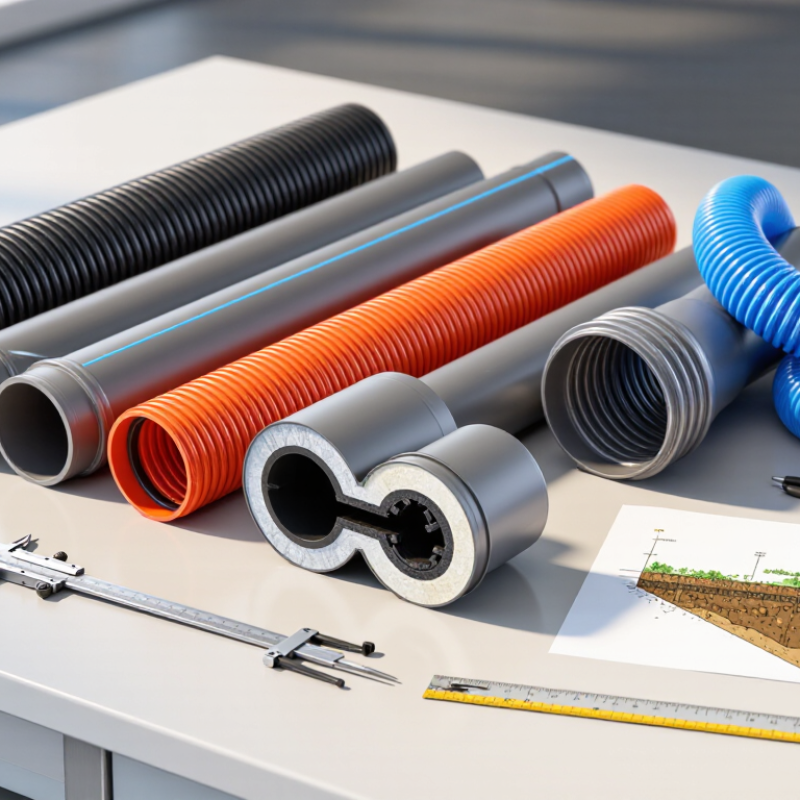
International buyers often compare ten leading corrugated pipe types: single-wall HDPE, double-wall HDPE, triple-wall PP, perforated drainage pipe, solid drainage pipe, corrugated PVC, flexible slotted pipe, metal corrugated pipe, heavy-duty culvert pipe, and cable-protection conduit. Each type serves a different installation condition. Single-wall HDPE bends easily around landscaping projects, while double-wall HDPE offers a smoother inner surface for stormwater flow. Triple-wall PP suits demanding sites where temperature and chemical resistance matter.

Perforated pipe collects groundwater through its slots. Solid drainage pipe carries water away without infiltration. Corrugated PVC can support lighter utility and drainage applications, but buyers should confirm its impact strength. Flexible slotted pipe is practical for agricultural fields and foundation trenches. Metal corrugated pipe handles tough culvert conditions, although corrosion protection requires close inspection. Heavy-duty culvert pipe needs careful review of soil pressure, traffic loads, and burial depth.

Cable-protection conduit shields electrical and communication lines from crushing and moisture. It is not a universal choice. Procurement teams should check nominal diameter, wall profile, ring stiffness, connection method, and temperature range. Test reports should match the actual production batch, not only a sample brochure.

International shipments also need accurate packing dimensions, material declarations, and installation guidance. Field inspections often reveal damaged edges or weak couplings before installation. That detail matters. No type wins everywhere. A cheaper pipe may create higher labor costs when trench conditions change. I would also recheck local standards, because terminology and testing requirements differ between markets.

Key Performance Features Across Different Corrugated Pipe Types

10 Best Corrugated Pipe Types for Global Buyers?

Key Performance Features Across Different Corrugated Pipe Types

Corrugated pipe selection starts with the load, soil, flow, and installation conditions. Single-wall HDPE pipe is lightweight, flexible, and suitable for agricultural drainage. Dual-wall HDPE adds a smoother inner wall, improving hydraulic efficiency. Its stiffness commonly follows ISO 9969 classes, including SN2, SN4, SN8, and SN16, measured in kN/m². Higher classes generally suit deeper burial, but installation quality still matters.

Polypropylene pipe offers strong chemical resistance and performs well under repeated temperature changes. Profile-wall PVC pipe provides dimensional stability and a low-friction interior. Perforated versions support groundwater collection around foundations and roads. Spiral-rib pipe combines a smooth bore with strong external ribs. It can reduce weight, although joint design deserves careful checking. Corrugated steel pipe handles heavy surface loads and high temperatures, while aluminum pipe resists corrosion in many wet environments. Concrete-lined corrugated pipe improves abrasion resistance in harsh flow conditions. Small-diameter flexible pipe remains practical for temporary drainage and farm access routes.

Hydraulic design reports from the Federal Highway Administration commonly use Manning’s roughness values near 0.012 for smooth interiors and about 0.024 for corrugated metal interiors. Actual values vary with sediment, joints, and aging. The World Bank’s climate-resilient infrastructure guidance stresses flood intensity, soil movement, and maintenance access during drainage design. That advice is easy to overlook. A laboratory stiffness rating cannot predict every unstable trench. Field compaction, bedding, and groundwater control may matter more than a catalog number. For global buyers, EN 13476, ASTM product standards, and local loading codes should be checked together, not separately.

10 Best Corrugated Pipe Types for Global Buyers

Key Performance Features Across Different Corrugated Pipe Types

The chart uses an indicative 1–10 comparative index based on commonly specified engineering characteristics: flexibility, chemical resistance, and impact or crush resistance. Actual performance depends on material grade, wall structure, diameter, installation conditions, temperature, and applicable standards.

How to Match Each Pipe Type With Its Intended Application

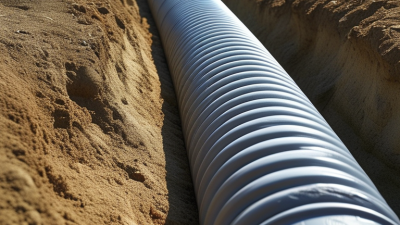
Choosing a corrugated pipe starts with the site, not the catalogue. Single-wall HDPE suits temporary drainage, agricultural ditches, and light-duty landscaping. Its flexible ribs follow uneven ground, but exposed sections can deform under traffic. Dual-wall HDPE offers a ribbed exterior and smoother interior. It fits road culverts, stormwater lines, and buried drainage where flow efficiency matters. Triple-wall designs provide greater stiffness for deeper burial. The FHWA Hydraulic Design Series No. 5 advises checking inlet control, outlet control, debris, and tailwater before selecting a culvert. Diameter alone is not enough.

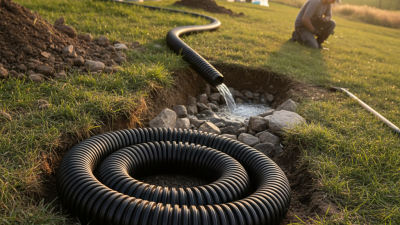
Perforated HDPE works for foundation drains and agricultural water collection. Use filter fabric and correctly graded gravel around it. Corrugated PVC is practical for smaller drainage runs, while polypropylene handles demanding temperature and chemical conditions. Metal corrugated pipe remains useful beneath roads and railways, especially where high structural strength matters. Spiral-wound profiles help rehabilitation projects with limited access. Smooth-interior profiles reduce sediment retention, but they may cost more. PPI’s Corrugated Polyethylene Pipe Design Manual commonly uses a 50-year design-life benchmark for properly designed installations. Soil chemistry, loading, installation quality, and sunlight can still change that result. Real sites are less predictable.

Tips: Ask for soil reports, cover depth, traffic loading, flow calculations, and temperature limits. Confirm compliance with AASHTO M294, ASTM F405, or the relevant local standard. Request stiffness, abrasion, and joint-test records. A larger pipe is not automatically safer. I have seen poor bedding defeat an excellent pipe. Review the trench detail before approving the purchase.

Global Purchasing Factors: Standards, Materials, Sizes, and Suppliers

Global buyers should compare corrugated pipe by standards, material, size, and supplier evidence. Appearance alone proves little. ASTM F405 and ASTM F667 cover several flexible polyethylene drainage applications in North America. European projects often use EN 13476, with stiffness classes such as SN2, SN4, and SN8. ISO 9969 measures ring stiffness in kilonewtons per square metre. These values help buyers match pipe strength with soil loads, traffic, and burial depth.

Material selection changes long-term performance. High-density polyethylene offers strong chemical resistance and flexible installation. Polypropylene can provide higher temperature resistance in demanding drainage conditions. The Plastics Pipe Institute’s 2024 PE Handbook uses a 100-year design basis for qualified polyethylene systems under defined conditions. That figure is not a guarantee. Installation quality, ultraviolet exposure, joint design, and soil conditions still matter. A lower-cost pipe may become expensive after deformation or leakage. I have seen specifications treated as paperwork, which is a risky shortcut.

Tips: Request test reports, stiffness results, resin details, and installation instructions. Confirm internal diameter, outside diameter, length, perforation pattern, and socket compatibility. Ask suppliers for batch traceability and independent certification. Check whether their stated standard matches your project country. The 2024 International Trade Centre Trade Map data also shows how widely plastic products move across borders, so documentation and packaging deserve attention. One detail is easy to miss: a supplier may quote nominal size, while your engineer needs hydraulic inside diameter. Clarify that difference before ordering.

10 Best Corrugated Pipe Types for Global Buyers? - Global Purchasing Factors: Standards, Materials, Sizes, and Suppliers

No. Corrugated Pipe Type Typical Material Main Global Applications Common Standards and Test References Typical Nominal Sizes Structural / Hydraulic Characteristics Connection and Installation Key Purchasing Checks Suitable Supplier Category
1 Single-Wall Corrugated HDPE Drainage Pipe High-density polyethylene (HDPE), usually black or natural-colored polyethylene compound Land drainage, agricultural drainage, leach fields, temporary water diversion, and non-traffic landscaping drainage ASTM F405 for corrugated polyethylene tubing; local drainage specifications may also apply Commonly about 75–300 mm inside diameter; larger sizes are available in some markets Lightweight and flexible with good chemical resistance; the corrugated interior creates higher flow resistance than smooth-wall pipe Overlap couplers, snap couplers, or fittings; usually supplied in coils for smaller diameters Confirm perforation pattern, open area, filter sock option, coil length, crush resistance, and resistance to ultraviolet exposure Plastic drainage-tube manufacturer or agricultural drainage product supplier
2 Dual-Wall Corrugated HDPE Stormwater Pipe HDPE outer corrugated wall with a smooth HDPE inner wall Stormwater drainage, highway drainage, culverts, site drainage, and underground water conveyance ASTM F2306; AASHTO M252 or M294 where applicable; ISO 9969 for ring-stiffness testing; EN 13476 may apply in European markets Commonly about 100–1500 mm outside diameter, depending on the regional product standard Smooth bore improves hydraulic performance; corrugated exterior provides high stiffness-to-weight efficiency Gasketed bell-and-spigot joints, split couplers, or band couplers; bedding and cover must follow the installation specification Verify pipe stiffness, watertightness, gasket material, joint dimensions, load class, and hydraulic inside diameter Structured-wall thermoplastic pipe manufacturer or civil drainage distributor
3 Profile-Wall or Structured-Wall HDPE Pipe HDPE with a profiled structural wall and a smooth or semi-smooth inner liner Large-diameter storm sewers, gravity sewers, retention systems, culverts, and low-pressure industrial drainage EN 13476; ISO 21138; ISO 9969; project-specific national sewer or drainage requirements Often about 300–3500 mm outside diameter; exact sizes depend on the profile and manufacturing system Suitable for large diameters with relatively low weight; ring stiffness depends on wall profile, resin, and manufacturing design Gasketed joints, extrusion-welded joints, electrofusion, or project-approved mechanical couplings Request ring-stiffness class, wall-profile drawings, deflection limits, joint testing, resin grade, and maximum burial depth Large-diameter structured-wall pipe producer or engineered infrastructure supplier
4 Corrugated Polypropylene (PP) Sewer and Drainage Pipe Polypropylene, often with a corrugated outer wall and smooth inner wall Sanitary sewer gravity lines, storm drains, industrial drainage, and applications requiring elevated temperature resistance EN 13476; ISO 21138; ISO 9969; additional national sewer standards may be required Commonly about 160–1200 mm outside diameter, with larger engineered systems available Good chemical resistance and generally higher temperature capability than standard polyethylene; stiffness is product-specific Gasketed push-fit joints, couplers, or welded connections depending on the system Check minimum service temperature, chemical compatibility, ring stiffness, gasket certification, and allowable deflection Polypropylene sewer-pipe manufacturer or municipal infrastructure distributor
5 Perforated Corrugated HDPE Land-Drain Pipe Perforated HDPE, sometimes supplied with a geotextile filter sock Foundation drainage, sports fields, retaining walls, agricultural fields, road subdrains, and groundwater collection ASTM F405 or relevant national agricultural-drainage specifications; project geotextile requirements may also apply Commonly about 75–200 mm inside diameter; supplied in coils or straight lengths Flexible and corrosion-resistant; drainage capacity depends on perforation area, trench aggregate, slope, and filter design Snap couplers, tees, wyes, elbows, and end caps; installed in a graded trench with suitable filter aggregate Confirm perforation location, hole size, open area, sock filtration rating, crush resistance, and coil memory Agricultural drainage supplier, geosynthetics distributor, or civil drainage product manufacturer
6 Corrugated HDPE Electrical and Communications Conduit HDPE, often produced as single-wall or double-wall conduit with a smooth cable path Underground power cables, telecommunications, fiber-optic networks, traffic systems, and utility crossings IEC 61386 series or EN 61386 for electrical conduit systems; utility-owner specifications may add cable protection requirements Commonly about 25–200 mm nominal diameter; larger utility ducts are also available Flexible, impact-resistant, and resistant to moisture and many chemicals; electrical performance depends on the cable system rather than the conduit alone Compression couplers, threaded or mechanical fittings, bell joints, or heat-fusion systems; supplied with draw rope or tracer wire when specified Check internal diameter, impact and compression ratings, pull-rope strength, flame behavior, UV resistance, and cable fill ratio Utility conduit manufacturer or electrical and telecommunications infrastructure distributor
7 Corrugated Flexible Metallic Hose Stainless steel, carbon steel, or other corrosion-resistant metal with optional braid Vibration isolation, equipment connections, gas and liquid transfer, thermal movement, and industrial process systems EN ISO 10380 for corrugated metal hose; ASME B31.3 may govern the piping system design; gas applications may require additional local approval Commonly about 6–300 mm nominal diameter; pressure and length limits vary significantly Handles vibration and movement; braided versions provide higher pressure capability but are not intended to replace rigid piping for all applications Welded, flared, threaded, or flanged end connections; installation must avoid twisting and excessive bending Verify pressure and temperature ratings, braid construction, minimum bend radius, media compatibility, fatigue cycle life, and end-fitting material Industrial hose manufacturer or process-equipment component supplier
8 Corrugated Galvanized Steel Culvert Pipe Hot-dip galvanized carbon-steel sheet formed into corrugations Road culverts, highway drainage, stormwater crossings, agricultural access roads, and small bridge approaches AASHTO M36; ASTM A929 for metallic-coated steel sheet used in corrugated steel pipe; national highway specifications may also apply Commonly about 300–3600 mm diameter, with larger structures formed as arches or multi-plate assemblies High mechanical strength and fast installation; corrosion life depends on coating, soil chemistry, abrasion, and water conditions Bolted corrugated couplers, flanges, or structural plate connections; bedding and backfill quality are critical Check coating mass, steel thickness, corrugation profile, design service life, soil pH, abrasion conditions, and bolt quality Metal culvert fabricator, highway drainage supplier, or structural plate manufacturer
9 Corrugated Aluminum Alloy Culvert Pipe Aluminum alloy sheet, commonly selected for natural corrosion resistance and low weight Roadside culverts, agricultural crossings, drainage channels, and locations where transport weight or corrosion resistance is important AASHTO M196; ASTM B744 for aluminum-alloy corrugated pipe; project design codes determine structural suitability Commonly about 300–3000 mm diameter, subject to profile, thickness, and structural design Lightweight and naturally corrosion-resistant in many environments; less resistant to certain alkaline or abrasive conditions than some alternatives Bolted couplers, flanges, or structural plate connections; avoid incompatible-metal contact without appropriate isolation Confirm alloy and temper, sheet thickness, water and soil chemistry, abrasion protection, galvanic compatibility, and load rating Aluminum culvert fabricator or specialized road-drainage supplier
10 Corrugated PVC Electrical Conduit Unplasticized polyvinyl chloride (uPVC), generally made as flexible or semi-flexible conduit Building services, underground electrical wiring, low-voltage systems, telecommunications, and cable protection IEC 61386 series or EN 61386; national electrical installation rules and fire classifications may also apply Commonly about 16–160 mm outside diameter; exact dimensions follow the applicable conduit classification Good electrical insulation and chemical resistance; temperature, impact, compression, and flame performance vary by classification Push-fit, solvent-welded, threaded, or compression fittings depending on the product system Check conduit classification, impact resistance, compression strength, flame behavior, operating temperature, and compatibility with fittings Electrical conduit manufacturer or building-services distribution supplier

Note: Dimensions are representative international purchasing ranges rather than universal limits. The applicable standard, pressure or stiffness class, installation method, and required certifications should be confirmed against the destination country, project specification, and end-use conditions before ordering.