Choosing the right corrugated drain pipe is not merely a matter of selecting the largest diameter. Water volume, soil pressure, burial depth, slope, and outlet conditions all influence performance. A pipe that looks suitable in a catalog may fail when surrounded by unstable soil or poorly compacted backfill. Site details matter.
Dr. David A. Bosscher, a civil engineering researcher known for studying buried pipe systems, stated, “The performance of a flexible pipe depends on the interaction between the pipe and the surrounding soil.” This principle remains highly practical. A corrugated drain pipe relies on proper bedding and side support. It does not work alone. Good installation is part of the pipe system.
Begin by identifying the drainage purpose. Is the pipe collecting groundwater, carrying stormwater, or protecting a foundation? Perforated pipe may suit subsurface collection, while solid pipe usually carries water to a safe discharge point. Diameter should match expected flow, not guesswork. Larger is not always better.
Material also deserves careful attention. Polyethylene offers flexibility and corrosion resistance, while local soil chemistry and traffic loads may affect its service life. Check connection quality, perforation placement, stiffness, and access for maintenance. Small mistakes can become expensive.
Admittedly, no selection guide can replace a site assessment. I have seen projects focus on pipe price while ignoring trench preparation. That is a weakness worth admitting. The right corrugated drain pipe balances hydraulic capacity, structural support, durability, and realistic installation conditions. Good drainage starts below the surface.
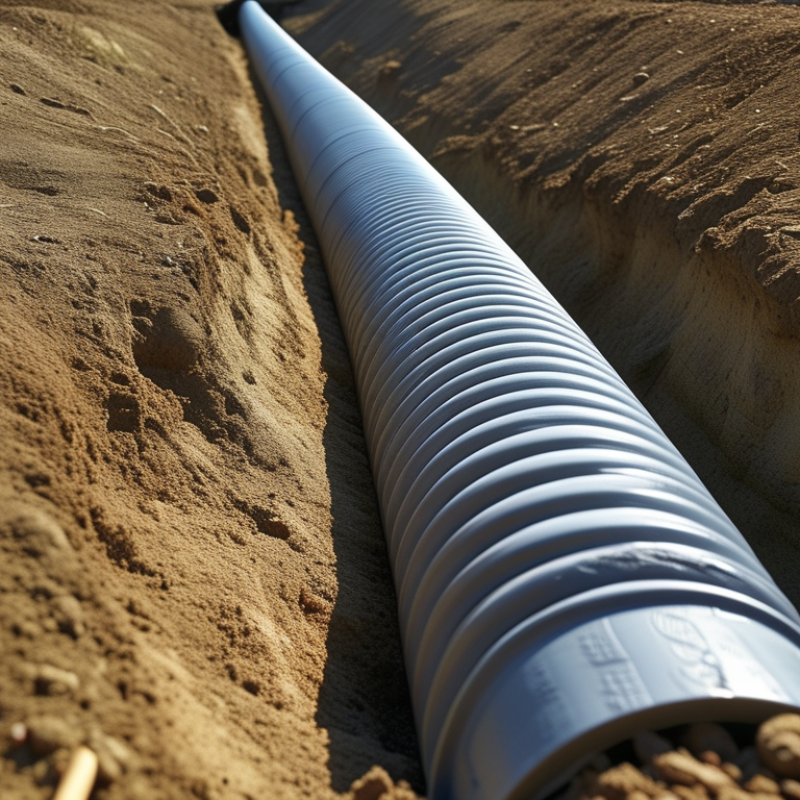
A corrugated drain pipe has a flexible, ribbed wall that helps it resist soil pressure. Its interior carries water away from saturated ground, foundations, driveways, or landscaped areas. The pipe may be perforated or solid. Perforated sections collect water through small openings, while solid sections transport water without absorbing surrounding moisture.
Water enters through the perforations and moves toward a lower outlet because of gravity. A gravel layer around the pipe creates open space for drainage. Filter fabric can reduce soil movement into the gravel and pipe. Without proper filtration, fine soil may slowly block the openings. The system can then fail quietly.
Choosing the right pipe requires more than checking its diameter. Measure the expected water volume, trench depth, soil type, and traffic load above the trench. A deeper installation may need stronger pipe and better bedding support. Keep a steady slope, but do not assume steeper is always better. Fast flow can erode the outlet area. I have seen drainage problems caused by poor outlet protection, not damaged pipe. Installation details deserve careful review. Local building requirements should also be checked before digging.

Choosing a corrugated drain pipe starts with the site, not the pipe diameter.
Walk the area after rainfall and mark ponding, erosion, saturated soil, and the lowest outlet. Measure the contributing surface, including roofs, driveways, lawns, and slopes. A small mistake here can distort the entire design.
Rainfall intensity controls peak flow. NOAA Atlas 14 provides location-specific precipitation-frequency data for events such as 10-year and 100-year storms. Use the value matching your project’s risk and service life. The FHWA HEC-22 drainage manual applies the Rational Method, Q = CiA, where runoff coefficient, rainfall intensity, and drainage area determine peak discharge. One inch of rain across one acre equals approximately 27,154 gallons. That volume can arrive quickly. It may overwhelm a narrow pipe.
Inspect the outlet before selecting a diameter. Confirm its elevation, legal discharge point, erosion risk, and downstream capacity. The U.S. Geological Survey notes that streamflow can change sharply during intense storms, so ordinary weather observations are unreliable. Test the soil with a simple infiltration check, but do not treat one test as final evidence. Clay, compacted fill, and a high water table can reduce infiltration dramatically. I have seen clean-looking calculations fail because the outlet was two inches too high. Recheck grades with a laser level, allow access for maintenance, and compare calculated flow with visible site behavior. Conservative assumptions are useful, but excessive sizing can also create stagnant water and unnecessary excavation.
Choosing corrugated drain pipe starts with the site, not the product label. Inspect soil, groundwater, sunlight exposure, and nearby chemicals. High-density polyethylene usually suits buried drainage because it resists moisture, corrosion, and movement. Flexible pipe can follow uneven ground, but poor bedding may cause deformation. In rocky soil, use clean granular backfill and remove sharp stones. Measure the drainage area and expected water volume before selecting a diameter. A larger pipe is not automatically safer. Oversizing can increase costs and complicate connections.
Tips: Measure twice. Check the slope. Confirm the outlet. Keep joints aligned. Review local drainage requirements before installation. For areas under driveways or roads, confirm the required load rating and minimum cover depth. Traffic creates repeated pressure, not just one heavy impact. Pipe strength depends on material, wall profile, bedding, and surrounding soil. A strong pipe can still fail in an unstable trench.
In practice, many installation problems begin with rushed site estimates. This deserves a second look. Use a level to verify slope, and check that water will discharge safely without eroding the outlet. Choose perforated pipe for subsurface collection and solid pipe for carrying collected water away. Where flooding could affect buildings, ask a qualified drainage professional to review flow calculations. Manufacturer data and local engineering guidance should support the final choice. Conditions vary. No single pipe fits every site.
Choosing the right corrugated drain pipe starts with the water problem, not the pipe diameter. A solid-wall design carries collected water away from foundations, driveways, or low garden areas. A perforated design gathers groundwater through openings along its length. In practice, mixing these functions can create disappointing results. I once saw a perforated pipe installed beside a downspout, where it slowly released roof water into already saturated soil.
Perforation pattern matters as much as pipe strength. Small, evenly spaced holes suit gradual groundwater collection in sandy or loamy soil. Larger openings may accept more water, but they also invite soil particles and clogging. For clay-heavy ground, wrap the pipe with suitable filter fabric and surround it with clean, washed gravel. Slotted pipes often need careful orientation. Place the openings where groundwater enters, not randomly against compacted soil. The best design can still fail when the trench has poor slope or crushed bedding.
Tips: Check soil texture, expected water volume, and surface load before selecting the pattern. Use solid pipe beneath vehicle paths when water collection is unnecessary. Measure the trench slope with a level, even on short runs. Inspect outlet protection after heavy rain. Local drainage guidance should confirm depth, cover, and discharge requirements. There is no perfect pattern for every site. Field conditions may prove your first choice incomplete.
Which corrugated pipe design and perforation pattern should you select?
The chart compares the percentage of the pipe circumference designed for water entry. Solid pipe provides 0% entry coverage and is normally used to convey collected water. Bottom-half perforation provides approximately 50% coverage and is a practical choice for many trench-drainage installations where controlled inflow and lower sediment exposure are desired. Full-circumference perforation provides 100% coverage and is suitable when water must enter from surrounding soil, but it generally requires properly graded filter material or geotextile protection.
Coverage percentages describe the perforated arc around the pipe and are geometric selection references, not hydraulic flow-test results. Final selection should also consider pipe diameter, soil conditions, installation depth, filter aggregate, and local drainage standards.
Installation method should match the site, not just the pipe diameter. An open trench is practical where access is easy and soil can be safely removed. It also allows workers to inspect the bedding and slope directly. For restricted areas, trenchless installation may reduce surface damage, but it demands accurate locating and specialized equipment. A stable base of compacted gravel helps prevent low spots. Even a small sag can hold water and sediment. Check the required fall with a level or laser during installation.
Accessories strongly influence performance. Use compatible couplers for secure joints, and seal exposed ends against soil and small animals. Catch basins help collect surface water near driveways or downspouts. Geotextile fabric can limit surrounding soil migration, although poor wrapping may restrict flow. Include access points where cleaning equipment might be needed. Small details matter.
Long-term value means comparing maintenance, repair access, and replacement risk. A cheaper pipe may become expensive if crushed by traffic or buried in unstable soil. Review local drainage requirements, expected water volume, and the manufacturer’s installation guidance. A simple flow test after backfilling can reveal blocked sections early. Many projects focus too heavily on purchase price. That is a planning mistake. I would also question unnecessary accessories; more parts do not always mean better drainage. Record the pipe route before covering it, because future repairs depend on that information.