Pease Pottage 01403 275 276
Petersfield 01730 777 350
Maidstone 01795 843 866
Cullompton 01884 211 788

10 Best Manhole Cover and Frame Manufacturers for Global Buyers

Choosing a manhole cover and frame supplier is a practical decision, not just a search for the lowest quote. These components sit in streets, industrial yards, drainage networks, and pedestrian areas. They must suit the site, expected loads, opening dimensions, and local installation practices. A cover that looks robust in a catalog may still be wrong for a particular chamber. Details matter.

This guide presents 10 manufacturers serving global buyers and compares factors that can shape a purchasing decision. These include product range, material options, manufacturing experience, quality controls, customization, and export support. Buyers should also check technical drawings, load classifications, surface finishes, and delivery terms directly with each supplier. Specifications and certifications can vary by product and destination, so a company’s general claims should not replace document review. Ask for evidence. Samples or reference projects may help, too.

No shortlist can identify one best manufacturer for every project. Needs differ between a quiet service lane and a busy freight terminal. Pricing, lead times, and available designs also change. Some details may be difficult to compare from public information alone. That is worth noting. Use the companies below as a starting point, then confirm current capabilities, testing records, and communication quality before placing an order. A careful comparison can reduce avoidable delays and help match the product to its real operating environment.

10 Best Manhole Cover and Frame Manufacturers for Global Buyers

Manhole Covers and Frames: Functions, Materials, and Main Product Types

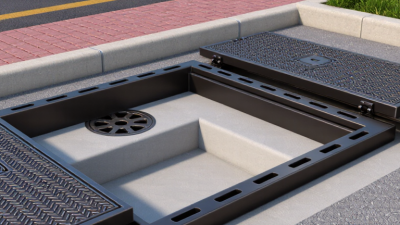
A manhole cover closes an access point to underground utilities, while its frame supports the cover and transfers surface loads into the surrounding pavement. Together, they help limit debris entry, reduce trip hazards, and allow crews to reach drainage, water, or communication networks. Fit matters. A loose cover can rock under traffic, creating noise and accelerating wear.

Material choice depends on the site, not just purchase price. Ductile iron handles heavy wheel loads and repeated impact, making it common on busy roads. Gray iron can suit lighter-duty locations, but it is more brittle under sudden loads. Steel and composite options may reduce weight or resist certain forms of corrosion. Performance still depends on design and installation. Even a strong cover can fail when its frame sits unevenly.

Product types include solid, vented, recessed, and locking covers, with round and square frames used in different access layouts. Vented designs allow airflow but may admit surface water or debris, so drainage conditions deserve attention. Locking mechanisms can help prevent unauthorized opening, though maintenance crews need reliable access. Load ratings should match the expected traffic and installation conditions. Buyers sometimes focus too much on the cover itself. The frame bedding and pavement around it matter just as much.

10 Best Manhole Cover and Frame Manufacturers for Global Buyers - Manhole Covers and Frames: Functions, Materials, and Main Product Types

An unbranded comparison of common manhole-cover and frame product configurations. Use the material, application, and load-class information as a starting point when evaluating suppliers and project specifications.

Product Configuration Typical Material Common Application Relevant EN 124 Class Key Features to Check
Pedestrian access cover and frame Ductile iron, steel, or composite material Pedestrian areas and areas used by cyclists A15 — 15 kN test load Secure seating, slip-resistant surface, clear opening, and suitability for the specified cover material
Footway and light-vehicle cover Ductile iron or composite material Footways and comparable areas; occasional light-vehicle access where specified B125 — 125 kN test load Frame stability, cover retention, opening method, and compatibility with the pavement finish
Kerbside drainage cover Ductile iron or steel Kerbside channels and drainage zones alongside roads C250 — 250 kN test load Grate or inlet design, waterway area, orientation, and correct positioning relative to the kerb
Roadway manhole cover and frame Ductile iron Carriageways and parking areas accessible to road vehicles D400 — 400 kN test load Load-class marking, frame depth, seating stability, locking arrangement, and installation details
Heavy-duty industrial access cover Ductile iron or steel Industrial sites and areas subject to high wheel loads E600 — 600 kN test load Specified traffic conditions, frame support, cover restraint, and certified test documentation
Very-heavy-duty access cover Ductile iron or steel Areas subject to exceptionally high wheel loads, such as some port or aircraft-pavement locations F900 — 900 kN test load Project-specific engineering requirements, installation support, lifting provisions, and applicable approvals
Reinforced-concrete cover and frame assembly Reinforced concrete components Applications specified for concrete access covers and frames Class selected for the location; verify the applicable EN 124 requirements Reinforcement details, dimensions, lifting points, and evidence of testing for the declared class
Composite access cover Composite materials Utility and drainage access points where a non-metallic solution is specified Class selected for the location; EN 124-5 applies to composite materials Declared load class, dimensions, cover retention, resistance to the intended environment, and test evidence
Thermoplastic access cover Polypropylene, polyethylene, or polyvinyl chloride Access points designed for suitable thermoplastic cover products Class selected for the location; EN 124-6 covers specified thermoplastic materials Material specification, declared class, temperature and chemical exposure limits, and installation instructions
Sealed or lockable utility cover Typically ductile iron or composite material Utility chambers where controlled access or reduced ingress is required Class selected according to the installed location Locking system, gasket and sealing design, access requirements, and load-class marking

Selection note: EN 124 load classes describe test-load categories; they are not direct statements of allowable vehicle weight. Choose the class according to the installation location, applicable standard, project specification, and verified product documentation. EN 124 is divided into material-specific parts, so confirm that the product’s material and declared classification match the relevant requirements.


EN 124 Load Classes: A15 (15 kN) Through F900 (900 kN)

EN 124 Load Classes: A15 (15 kN) Through F900 (900 kN)

EN 124 classes help buyers match a manhole cover and frame to expected traffic loads. A15 suits pedestrian areas and spaces used by bicycles. B125 is commonly specified for footways and light parking areas. C250 may fit kerbside channels, while D400 is designed for carriageways and areas used by heavier vehicles. E600 and F900 address demanding industrial or aircraft-pavement applications. These figures describe test loads, not a simple guarantee of performance in every installation.

The setting matters. A D400 cover installed in a weak or poorly prepared frame can rock under traffic, loosen, and create noise. Check the complete assembly, including the frame, clear opening, material, and installation details. Confirm that the product’s declared class matches the project specification and the actual location. A higher class is not automatically the better choice; it may add cost and weight without solving a site-specific problem.

Tips: Walk the site before ordering. Note delivery routes, vehicle turning points, and areas where forklifts stop. Ask suppliers for relevant test documentation and installation guidance. Keep records of the selected class and inspection findings. One detail is easy to miss: local drainage geometry can affect where a cover sits. Recheck it with the project engineer, especially when traffic patterns may change.

Ductile Iron Specifications: ASTM A536 Grade 65-45-12 Properties

ASTM A536 Grade 65-45-12 is a ductile iron specification often considered for manhole covers and frames. Its designation identifies minimum tensile strength of 65 ksi, yield strength of 45 ksi, and elongation of 12 percent. In practical terms, the material combines useful strength with some capacity to deform before fracture. That balance matters when a cover experiences repeated wheel loads, vibration, or occasional impact.

Still, grade numbers do not tell the whole story. A well-made casting needs sound nodules, consistent wall thickness, and freedom from harmful defects. Ask for test reports linked to the production lot, and confirm that tensile specimens represent the supplied castings. Small differences in cooling or section thickness can affect results. Details matter.

For global buyers, separate material requirements from cover load-class requirements. ASTM A536 describes ductile iron properties; it does not, by itself, establish the installed assembly’s load rating. Check dimensions, seating fit, coating, and test evidence against the project specification. A cover may meet the stated grade yet perform poorly if it rocks on its frame. That is easy to overlook. Verify the standard edition and acceptance criteria before ordering, since paperwork and sampling practices can vary between suppliers.

ASTM A536 Grade 65-45-12: Ductile Iron Mechanical Properties

ASTM A536 Grade 65-45-12 specifies a minimum tensile strength of 65 ksi, a minimum yield strength of 45 ksi, and a minimum elongation of 12% in 2 inches. These values are commonly used as baseline requirements when evaluating ductile iron manhole covers and frames for global applications.

How to Assess 10 Manufacturers: Quality, Certification, Capacity, and Export Reach

A practical comparison of ten manhole cover and frame manufacturers should begin with product evidence, not polished catalog photos. Ask for material grades, load-test results, dimensional tolerances, and inspection records tied to the exact model under review. Request samples or recent production photos; a smooth coating can hide uneven seating surfaces or weak finishing. Small details matter.

Certificates deserve careful checking. Confirm the issuing body, scope, validity dates, and whether the documented product matches the offered design. A certificate for one range may not cover another. Check twice. Capacity is equally important: compare monthly output with mold availability, workforce, and past delivery schedules. Ask how peak orders are handled, and whether testing records remain available for each batch. Numbers can look reassuring, though they may describe theoretical capacity rather than routine output.

Export reach means more than a list of destinations. Review experience with the buyer’s packaging, marking, and shipping requirements, then request examples of export documents with sensitive details removed. Clarify lead times, spare-part availability, and who resolves damage or dimensional issues after delivery. A supplier may answer quickly during quotation, yet respond differently when a shipment is delayed. That uncertainty is worth discussing early. Keep a written scorecard, but leave room for judgment; paperwork and factory visits can still miss problems. The comparison is useful, not perfect.

Global Buyer Checklist: Match Load Class, Dimensions, and Finish to the Project

Selecting a manhole cover and frame begins with actual traffic, not a generic product label. Identify whether the installation serves a footpath, car park, service road, or heavy-vehicle lane. Match the specified load class to expected wheel loads and the project’s governing standard. Classes and test methods can differ between markets, so confirm the standard in the purchase documents. Do not judge capacity by cover weight alone. A heavy casting is not automatically suitable.

Measure the clear opening, frame dimensions, seating depth, and cover thickness against the chamber drawing. Check hinge direction, locking arrangement, and lifting access for maintenance crews. Allow for bedding material and finished pavement level. A small mismatch can leave a rocking cover or a raised edge that catches wheels. Ask for dimensional tolerances and inspection records. Small details matter.

Choose the finish for the exposure: coastal air, de-icing salts, standing water, or ordinary urban conditions. Specify coating type and coverage, and clarify whether the cover will be paved over or left exposed. A sample helps, but it cannot prove long-term performance. Even a careful checklist can miss site conditions; verify fit and drainage before installation is complete.