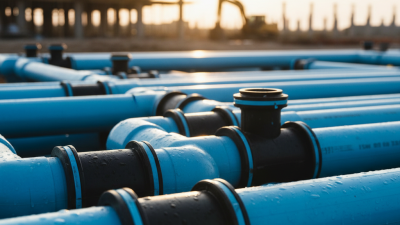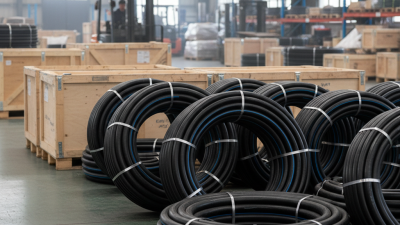
Underground pipe is rarely visible, yet it carries water, wastewater, gas, and critical utilities beneath roads, farms, and cities. For global buyers, supplier selection should involve more than price. Material traceability, pressure performance, joint design, corrosion resistance, factory testing, and installation support can decide whether a pipeline serves for decades or fails beneath a busy highway.
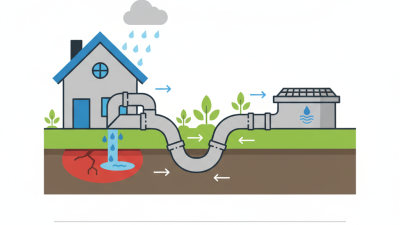
The need is substantial. The U.S. Environmental Protection Agency’s 7th Drinking Water Infrastructure Needs Survey estimates that American drinking-water systems require about $625 billion in investment from 2021 to 2050. The American Society of Civil Engineers gave U.S. drinking-water infrastructure a C− grade in its 2021 Infrastructure Report Card. ASCE also reported that water systems lose roughly 6 billion gallons daily through leaks. That figure should make every procurement team pause.
Dr. Steven Folkman, a Utah State University researcher, reported: “The average water main break rate in the United States is 14.6 breaks per 100 miles per year.” His finding highlights a practical truth: buried products are difficult and expensive to inspect after installation. Quality must be demonstrated before delivery.
This guide examines China’s leading underground pipe manufacturers for global buyers. It considers production experience, export capability, certifications, testing equipment, and project references. Standards are not perfectly comparable across countries. That is a weakness worth acknowledging. Buyers should verify certificates, inspect samples, review test records, and confirm local compliance before signing contracts. A reliable manufacturer should welcome those questions.
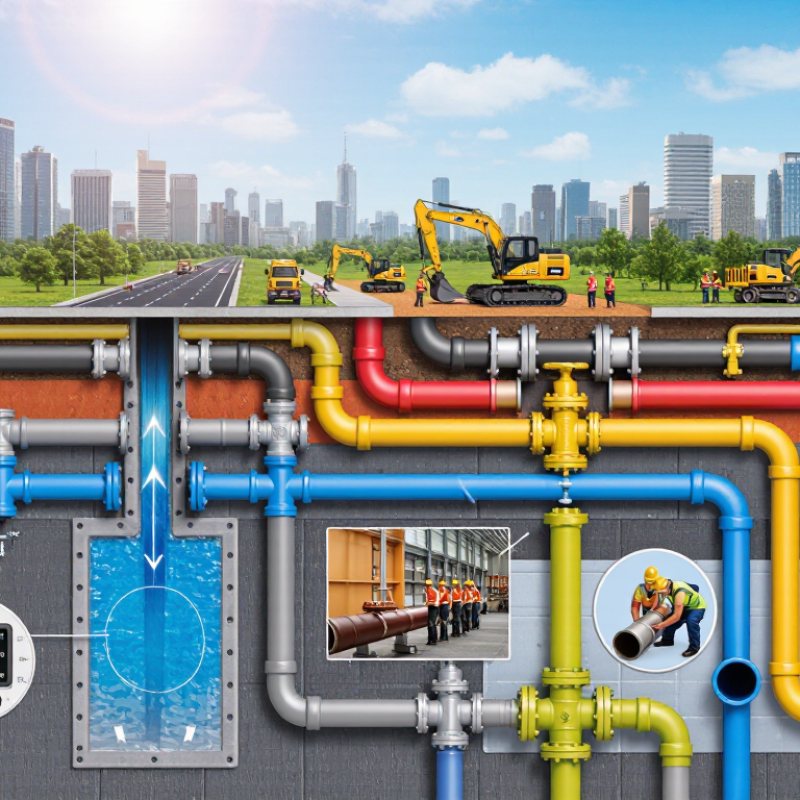
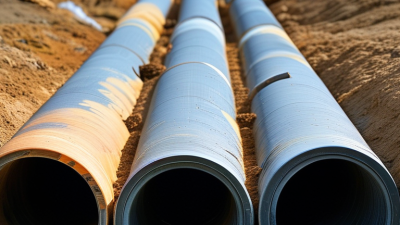
China’s underground pipe manufacturing industry serves water supply, drainage, irrigation, sewage, heating, and telecommunications projects. Its product range is broad. Manufacturers commonly produce HDPE, PVC, ductile iron, steel, concrete, and multilayer composite pipes. Each material fits different ground conditions, pressure levels, and service lives.
HDPE pipes are lightweight and resist corrosion, making them practical for water and gas distribution. PVC pipes offer smooth internal surfaces and efficient installation for drainage systems. Ductile iron provides strength under heavy traffic and soil loads. Steel pipes support high-pressure applications, while concrete pipes suit large-diameter stormwater and sewage networks. Telecom projects often use smaller conduits with multiple internal channels.
Reliable sourcing requires more than comparing prices. Buyers should review raw-material certificates, dimensional records, pressure-test results, and production traceability. Factory audits can reveal storage problems, uneven extrusion, or weak packaging. Export experience also matters because pipe length, socket design, coating, and documentation must match the destination market’s standards. In practice, specifications are sometimes unclear at the quotation stage. That creates avoidable changes later. A detailed drawing, installation method, and soil report can reduce this risk. No single pipe material suits every project. Careful technical review remains essential.
| Data Dimension | Typical Industry Data | Global Buyer Relevance |
|---|---|---|
| Primary Underground Pipe Materials | HDPE, PVC-U, PVC-O, ductile iron, reinforced concrete, steel, and fiberglass-reinforced polymer (GRP/FRP) | Material selection depends on pressure, soil conditions, corrosion exposure, temperature, installation method, and service life requirements. |
| Common Product Categories | Potable-water pipes, sewer and drainage pipes, irrigation pipes, gas-distribution pipes, industrial-process pipes, conduit pipes, and culvert pipes | The application determines required chemical resistance, pressure rating, stiffness, joint design, and regulatory approvals. |
| Typical HDPE Pipe Size Range | Approximately 16 mm to 2,000 mm outside diameter, depending on the production line and application | Small diameters are common in service and irrigation systems; larger diameters are used for municipal water, dredging, outfalls, and industrial projects. |
| Typical PVC Pipe Size Range | Commonly about 20 mm to 1,000 mm outside diameter for pressure, sewer, drainage, and conduit products | PVC is widely selected where low weight, corrosion resistance, dimensional consistency, and economical installation are important. |
| HDPE Pressure Classification | Pressure pipes are commonly specified by SDR and PN; frequently used SDR values include SDR11, SDR13.6, SDR17, and SDR21 | A lower SDR generally means a thicker wall and higher pressure capability at the same material grade and design temperature. |
| PVC Pressure Classification | PVC pressure products are commonly identified by PN, pressure class, or SDR, depending on the applicable standard | Buyers should compare pressure ratings at the project design temperature rather than relying only on nominal size. |
| Potable-Water Standards | Common references include ISO 4427 and EN 12201 for polyethylene water pipes, and ISO 1452 for PVC-U water and pressure applications | The destination country may additionally require drinking-water contact approval, testing, or certification from an accepted authority. |
| Gas-Distribution Standards | ISO 4437 and EN 1555 are widely referenced for polyethylene pipes used in gas supply systems | Gas projects normally require traceability, approved resin grades, controlled fusion procedures, and local utility acceptance. |
| Gravity Sewer and Drainage Standards | Common references include EN 1401 for PVC-U underground non-pressure drainage and sewer systems and ASTM D3034 for PVC sewer pipe | Ring stiffness, deflection control, joint tightness, and bedding requirements are critical for buried gravity systems. |
| Pipe Manufacturing Processes | Extrusion for thermoplastics; centrifugal casting for many ductile-iron products; filament winding or centrifugal casting for GRP; molding and reinforcement processes for concrete pipes | The process affects dimensional accuracy, wall uniformity, pressure performance, joint compatibility, and inspection requirements. |
| Common HDPE Joining Methods | Butt fusion, electrofusion, mechanical flange connections, and compression fittings for selected smaller-diameter systems | Fusion parameters, operator qualification, surface preparation, alignment, and cooling time should be documented for project acceptance. |
| Common PVC Joining Methods | Elastomeric gasket joints, solvent-cement joints for applicable systems, and flanged connections | Joint selection must match the pipe standard, pressure requirement, installation conditions, and local code. |
| Underground Installation Methods | Open-cut trenching, horizontal directional drilling, pipe bursting, sliplining, and direct-bury installation | Flexible pipes such as HDPE are often suitable for trenchless installation when design calculations and fusion procedures are properly controlled. |
| Key Quality-Control Tests | Dimensional inspection, hydrostatic pressure testing, tensile or impact testing where applicable, ring-stiffness testing, melt-flow-rate checks, and visual inspection | Inspection plans should define sample frequency, test methods, acceptance criteria, calibration records, and third-party verification when required. |
| Raw-Material Requirements | Pressure-grade polyethylene, PVC compounds, ductile iron, steel, concrete constituents, reinforcement, and corrosion-protection materials | Material certificates, batch traceability, approved additives, and recycled-content declarations may be required by the project specification. |
| Product Length and Packaging | Rigid pipes are commonly supplied in approximately 5 m, 6 m, or 12 m lengths; flexible polyethylene pipes may be supplied in coils or long lengths | Packing must prevent ovalization, impact damage, ultraviolet exposure, contamination, and movement during multimodal transport. |
| Export Documentation | Commercial invoice, packing list, bill of lading, certificate of origin where applicable, inspection report, test certificates, and product data sheet | The exact document set depends on the importing country, contract terms, customs classification, and project-financing requirements. |
| Buyer Specification Checklist | Nominal size, outside diameter, wall thickness, material grade, SDR or pressure class, pipe length, color, joint type, applicable standard, and test requirements | A complete technical schedule reduces quotation differences and makes factory, laboratory, and site inspection results easier to compare. |
| Main End-Use Sectors | Municipal water supply, wastewater collection, stormwater drainage, agricultural irrigation, natural-gas distribution, mining, industrial utilities, telecommunications, and district-energy infrastructure | Different sectors use different combinations of pressure performance, stiffness, abrasion resistance, chemical resistance, and installation flexibility. |