Pease Pottage 01403 275 276
Petersfield 01730 777 350
Maidstone 01795 843 866
Cullompton 01884 211 788

What Is a Shuttle Rotomolding Machine and How Does It Work?

A Shuttle Rotomolding Machine is a practical system for producing strong, hollow plastic parts with consistent wall coverage. It uses two or more mold stations that move between heating and cooling areas. While one mold heats, another can be opened, loaded, or unloaded. This reduces idle time and supports steady production.

The process begins with measured polymer powder inside a hollow mold. The shuttle carries the closed mold into an oven, where controlled heat softens the material. Two-axis rotation spreads the molten polymer across every internal surface. The mold then moves to a cooling station. Air, water mist, or both lower the temperature before the finished part is removed. Simple in principle. Not always simple in practice.

Glenn Beall, a respected rotational-molding consultant and author, describes the method as “a process for producing hollow plastic parts without using pressure.” That observation explains the machine’s main advantage. Low pressure can reduce tooling costs and support complex shapes, but it also demands careful powder control, mold design, and cycle management. The Association of Rotational Molders emphasizes these factors in its technical guidance and training materials. Recent market reviews from Grand View Research and Mordor Intelligence also identify growing demand for rotationally molded tanks, containers, playground equipment, and industrial housings. Their estimates differ because market definitions vary. That limitation matters. A machine’s value cannot be judged by market growth alone. Operators must examine cycle time, energy use, cooling control, labor access, and part quality. This article explains those working principles, with attention to the details visible on a real factory floor.
What Is a Shuttle Rotomolding Machine and How Does It Work?

Definition and Core Purpose of a Shuttle Rotomolding Machine

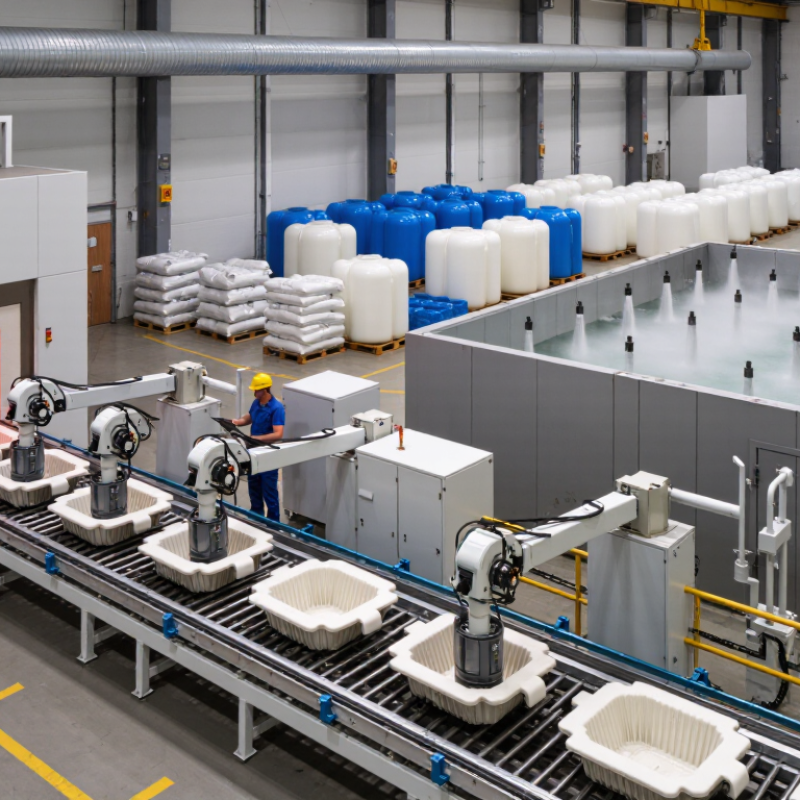
A shuttle rotomolding machine is a thermoplastic molding system with movable mold platforms. Its core purpose is producing hollow plastic parts with controlled wall thickness. The shuttle moves a mold into a heated oven, then returns it to a cooling or loading area. During heating, the mold rotates on two axes. This motion spreads softened plastic across the internal surfaces.

The machine usually serves two or more stations. One platform may remain in the oven while another is unloaded, inspected, or prepared. This arrangement supports flexible production without requiring a separate oven for every mold. Operators can manufacture tanks, containers, housings, and other large hollow components. The process also avoids weld lines created by joining several molded sections.

In practical operation, results depend on more than oven temperature. Mold condition, resin quantity, rotation speed, cooling airflow, and cycle timing all influence the final part. An experienced operator checks corners, seams, and wall thickness after demolding. Small changes can prevent distortion or trapped stress. It is not automatically the best machine for every factory. Shuttle systems need floor space, careful scheduling, and disciplined mold handling. A weak cooling setup may still produce warped parts. That detail is easy to overlook. Improvements often come from reviewing actual cycle data rather than relying only on standard settings.

Main Components and Their Functions

What Is a Shuttle Rotomolding Machine and How Does It Work?

A shuttle rotomolding machine uses controlled heat and rotation to form hollow plastic products. Its shuttle carriage moves a mold between the oven, loading area, and cooling station. During heating, the mold rotates on two axes, spreading plastic powder across its inner surface. The material melts gradually and builds a consistent wall.

Main Components and Their Functions

The oven supplies controlled heat through gas burners or electric heating elements. Air circulation helps reduce hot and cold zones inside the chamber. The shuttle carriage supports the mold and travels along rails between working stations. Its drive system controls rotation speed, direction, and movement during each cycle. Small adjustments matter here. Uneven motion can create thin corners or unwanted material buildup.

The mold defines the product’s shape and usually includes vents for releasing trapped air. A vent that is too small may increase internal pressure. A vent that is too large can affect surface quality. The cooling station uses air, water mist, or both to solidify the molded part without causing severe distortion. Operators monitor mold temperature, oven temperature, rotation speed, and cooling time through the control system.

Loading and unloading equipment also affects production reliability. Clean mold surfaces support better release and more stable dimensions. In practical operation, temperature sensors are not perfectly accurate, so experienced operators check parts instead of trusting displays alone. Wall thickness, warping, and surface texture reveal problems quickly. Some cycles still need adjustment, especially when product geometry changes.

Step-by-Step Rotational Molding Process

What Is a Shuttle Rotomolding Machine and How Does It Work?

Step-by-Step Rotational Molding Process

A shuttle rotomolding machine uses movable mold carts for heating, cooling, loading, and unloading. Each cart carries a mold into a heated chamber. The operator first measures polymer powder and places it inside the clean, open mold. Correct material weight matters because it controls the final wall thickness.

The mold closes and moves into the oven. It rotates on two axes while heated air surrounds its surfaces. As the powder melts, it spreads across the inner walls through continuous rotation. There is no internal core pressing the plastic outward. The machine depends on heat, gravity, rotation speed, and timing.

When the material has fully fused, the cart leaves the oven and enters the cooling area. Air, water mist, or a controlled combination lowers the mold temperature. Cooling must be gradual. Fast cooling can create distortion, stress, or uneven shrinkage. Not perfect every time.

After cooling, workers open the mold and remove the hollow part. They trim flash, check dimensions, and inspect the surface for bubbles, thin areas, and warping. Experienced operators also review cycle records before changing settings. A small adjustment in oven temperature or cooling time may improve one part but harm another. That is why process control requires measurement, patience, and practical judgment.

Heating, Cooling, and Mold Handling Operations

A shuttle rotomolding machine uses separate heating and cooling stations to produce hollow plastic parts. A mold is clamped onto a shuttle carriage, which moves between these work areas. During loading, technicians measure resin carefully and inspect the mold for damaged seals or blocked vents. Small mistakes here can affect wall thickness later.

Inside the heating chamber, the mold rotates around two axes. This movement spreads the resin across the internal surfaces as heat melts it. Air temperature, rotation speed, and heating time must match the resin and mold design. Operators often check temperature records and part samples, rather than trusting one setting. The process is not perfectly uniform. Corners and deep ribs may heat more slowly.

The shuttle then carries the mold into the cooling zone. Fans or controlled air systems remove heat while rotation continues. Stopping rotation too early may cause sagging, uneven walls, or distortion. Cooling too quickly can create stress, so experienced operators adjust airflow gradually. When the part is stable, the carriage returns for mold opening and part removal. Simple handling matters. A warm part can still deform under careless gripping. After demolding, technicians trim flash, inspect surfaces, and compare dimensions with production specifications. Even reliable cycles need review, because ambient temperature, resin moisture, and mold condition can quietly change the result.

Applications, Advantages, and Limitations

What Is a Shuttle Rotomolding Machine and How Does It Work?

Applications, Advantages, and Limitations

A shuttle rotomolding machine moves molds between heating and cooling stations. The mold rotates on two axes during heating. Plastic powder melts and coats the inner surface evenly. Cooling then solidifies the hollow part. Operators unload the finished product before repeating the cycle. The process looks simple, but temperature control requires real experience.
Typical applications include water tanks, kayaks, playground components, agricultural containers, and medical housings. Grand View Research estimated the global rotational molding market at about $5.2 billion in 2023. It also forecast growth through 2030. Fortune Business Insights reports different market values and growth rates, showing why market estimates deserve careful comparison. Shuttle systems suit medium-sized production because one oven can serve multiple molds.
The advantages are practical. Low-pressure molding reduces tooling costs and creates strong, seamless products. Designers can add inserts, double walls, and complex curves. Yet cycle times are often longer than injection molding. Warpage, uneven wall thickness, and powder distribution can still occur. Most machines process polyethylene-based materials, which limits some designs. Energy consumption also matters. The U.S. Department of Energy’s Industrial Decarbonization Roadmap states that process heating uses about 51% of manufacturing energy. Better insulation and heat recovery may help, but they do not remove every limitation.