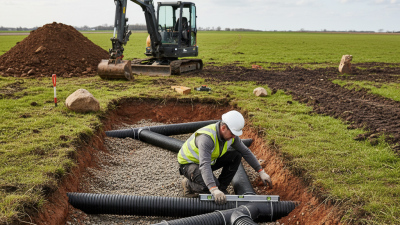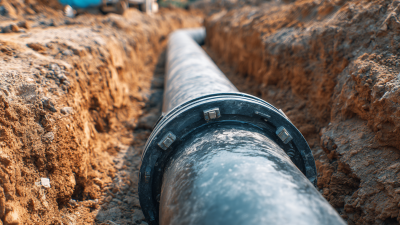
Choosing a perforated pipe in 2026 is not just a diameter decision. It means matching the pipe to soil, water flow, burial depth, and the consequences of failure. A pipe that looks suitable on a drawing can clog when fine sediment meets oversized openings. In the field, that detail matters.
The scale of water infrastructure makes careful selection more than routine maintenance. The U.S. Environmental Protection Agency’s 2022 Clean Watersheds Needs Survey estimated $630.1 billion in wastewater, stormwater, and related infrastructure needs over 20 years. That figure does not prescribe a pipe type, but it underscores the cost of durable drainage planning. The American Society of Civil Engineers’ 2021 Infrastructure Report Card also gave stormwater infrastructure a “D” grade, citing aging systems and growing rainfall pressures. These sources provide context, not a substitute for project-specific design.
This guide explains how to compare perforation patterns, materials, strength ratings, and filter wraps. It also considers installation conditions, including trench bedding and the risk of soil migration. Start with the site’s soil and discharge requirements. Then check manufacturer specifications and applicable engineering guidance. Small choices matter. A wider slot is not always better, and a stronger wall cannot fix poor filtration. Even experienced teams can overlook that. The right selection depends on measured conditions, not a catalog image. When site data are incomplete, pause and verify them before ordering.
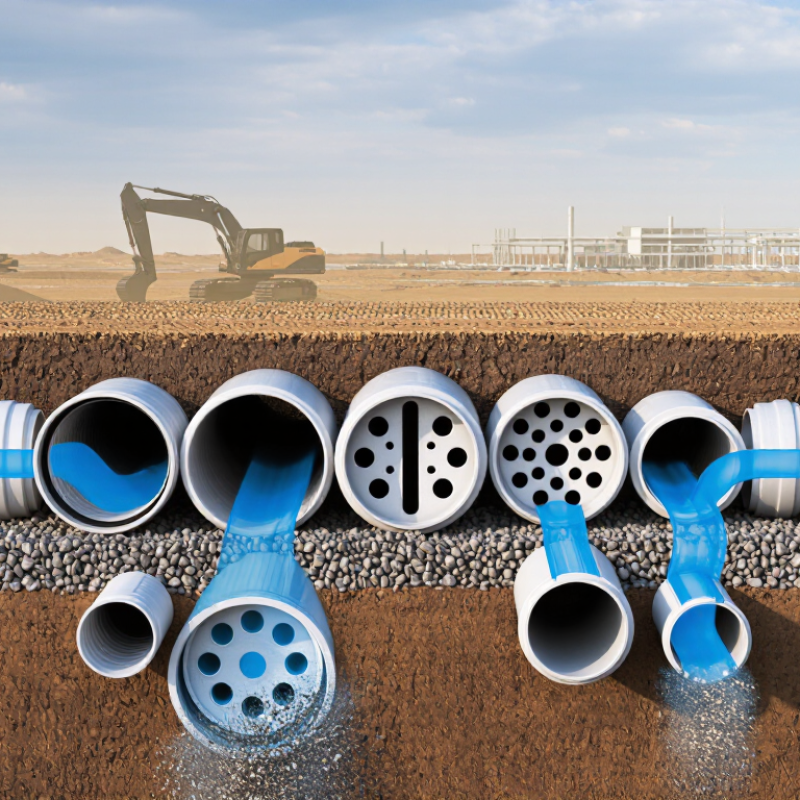
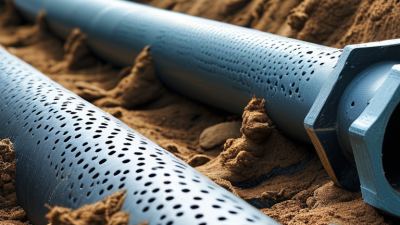
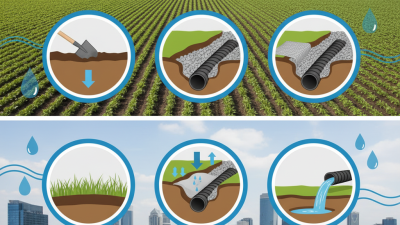
Perforated pipe is a drainage pipe with openings that let water enter or leave along its length. In a typical French drain, water seeps through gravel, passes through the holes, and flows toward an outlet. The same basic design supports foundation drainage, road subdrains, retaining walls, and some agricultural water-management systems. Small details matter: hole size, pipe stiffness, filter fabric, and slope can affect whether a system drains or clogs.
Stormwater needs are growing in many communities. The American Society of Civil Engineers’ 2021 Infrastructure Report Card assigned U.S. stormwater infrastructure a D grade, citing aging systems and growing flood risks. That context helps explain why drainage design deserves attention, even on a modest property. For example, a pipe beside a basement wall must collect seepage without directing it back toward the foundation. A field drain, by contrast, may need openings positioned to manage groundwater across a broad area.
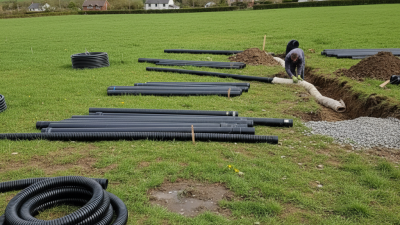
Material and layout should match the soil and installation conditions. Corrugated plastic is lightweight and flexible; rigid PVC can hold a straighter grade. Fine soils may require a suitable geotextile or graded aggregate to limit sediment entry. Yet fabric is not a magic fix. Poor wrapping, an undersized outlet, or inadequate slope can still cause trouble. Check local engineering guidance and site conditions before choosing a pipe. One overlooked detail can undo the whole installation.
| Selection Factor | Common Options or Guidance | Typical Applications | What to Check Before Selection |
|---|---|---|---|
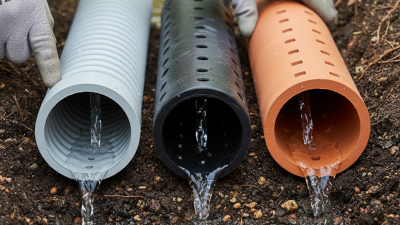
| Pipe material | PVC or HDPE for many drainage installations; corrugated polyethylene for flexible subsurface drainage; galvanized or stainless steel where metal strength or specific environmental resistance is required. | Foundation drainage, agricultural drainage, stormwater management, and industrial systems. | Consider soil chemistry, water temperature, expected loads, installation method, and applicable local standards. Material suitability depends on the project environment. |
| Perforation pattern | Perforations may be arranged in rows or slots. Hole size, spacing, and open area vary by pipe design and intended flow conditions. | Collecting groundwater, draining soil, or admitting water into a collection pipe. | Match the opening pattern to the surrounding soil and filter design. Smaller openings alone do not prevent clogging if the soil or filter arrangement is unsuitable. |
| Pipe diameter | Available diameters vary by product and region. The required diameter is determined by design flow, pipe slope, layout, and system capacity. | Small landscape drains through larger site drainage and stormwater networks. | Use a hydraulic design appropriate to the expected inflow and downstream connection. Do not select diameter solely by matching an existing pipe visually. |
| Perforated or solid pipe | Perforated sections collect or disperse water through openings; solid-wall sections convey water without allowing surrounding soil or groundwater to enter. | Perforated pipe is commonly used in collection zones; solid pipe is often used for conveyance to an outlet. | Confirm where water should enter or leave the system. Many installations use both types in separate sections. |
| Soil and filter compatibility | A graded aggregate envelope or a suitable geotextile filter may be used, depending on soil conditions and system design. | French drains, retaining-wall drainage, foundation systems, and field drainage. | Choose the filter arrangement based on soil particle size and water movement. Incorrect filter selection can contribute to sediment entry or reduced flow. |
| Structural loading | Pipe stiffness and wall construction differ among solid, smooth-wall, and corrugated products. | Buried installations beneath landscaped areas, roads, parking areas, or buildings. | Check burial depth, soil cover, traffic loads, bedding, and installation instructions. Load capacity depends on the pipe and the installed soil system. |
| Installation slope and outlet | Gravity drainage requires a planned route and suitable fall where site conditions permit. A functioning outlet is essential. | Foundation drains, roadside drainage, and gravity-fed agricultural systems. | Verify elevation, discharge location, backflow or erosion risks, and access for inspection. Slope requirements should follow the project design and local codes. |
| Maintenance access | Cleanouts, inspection points, and accessible outlets can support inspection and maintenance. | Long drain runs, systems near sediment sources, and installations where access is limited. | Plan access before burial and consider whether sediment, roots, or debris could obstruct the system over time. |
| Common use: foundation drainage | Perforated pipe is commonly placed near the footing with a designed drainage aggregate and filter arrangement. | Collecting water around below-grade foundations and directing it toward an approved outlet or sump system. | Coordinate pipe placement, waterproofing, filter materials, and discharge details with the building design and local requirements. |
| Common use: agricultural drainage | Subsurface perforated pipe collects excess water from soil and conveys it to a drainage outlet. | Reducing prolonged soil saturation in agricultural fields where subsurface drainage is appropriate. | Drain spacing, depth, outlet capacity, and environmental permissions require site-specific assessment. |