10 Essential Tips for Choosing the Best Perforated Pipe for Your Project
When embarking on a construction or drainage project, selecting the right materials can significantly impact the project's success. One such critical material is the perforated pipe, which plays a vital role in effective water drainage and soil management. According to the latest industry report by the American Society of Civil Engineers (ASCE), improper drainage can lead to increased maintenance costs by up to 40%. Therefore, understanding the essential factors in choosing the best perforated pipe becomes paramount for engineers and contractors alike.
Industry expert Dr. Jonathan Miller, a leading authority on drainage systems, emphasizes the importance of proper selection: "The performance of a drainage system largely depends on the quality and type of the perforated pipe used. Choosing wisely can enhance longevity and efficiency in numerous applications." With a plethora of options available in today's market, navigating through specifications such as hole size, pipe material, and flow capacity can be daunting. Our guide aims to simplify this process by providing ten essential tips that will help you make an informed decision, ensuring your project’s success while contributing to sustainability and cost-effectiveness.
Understanding the Different Types of Perforated Pipes for Your Project
Evaluating Durability and Maintenance Needs in Perforated Pipe Selection
Comparison of Different Types of Perforated Pipes
This bar chart displays the durability ratings of different types of perforated pipes, helping you to make an informed decision for your project. Each type of pipe offers various strengths and weaknesses, suitable for different applications.
Key Factors to Consider When Selecting Perforated Pipe Material
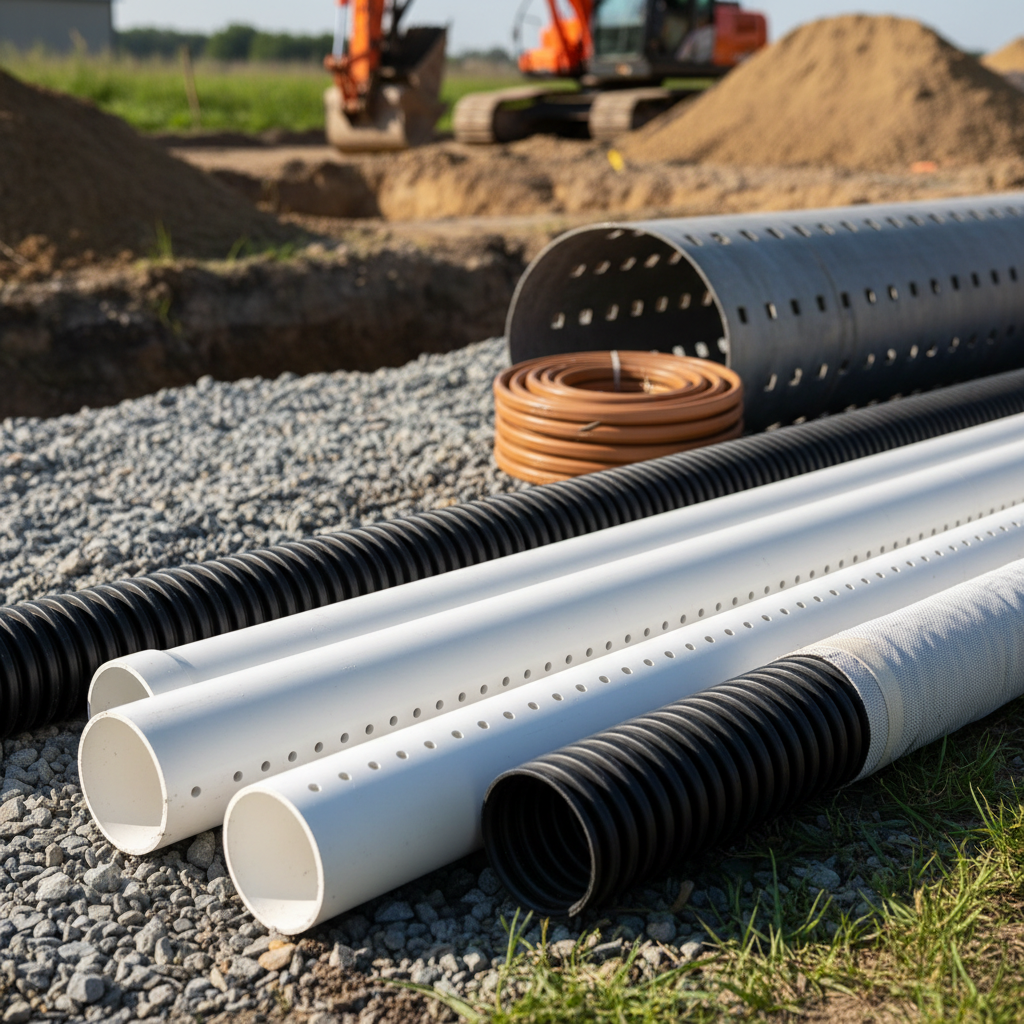
When selecting perforated pipe material for your project, several key factors come into play.
First and foremost, you should consider the pipe's intended application. Perforated pipes are commonly used in drainage systems,
landscape irrigation, and even as filtration solutions.
Understanding the specific requirements of your project, such as load-bearing capacity and flow rates, will help you determine the appropriate material.
For example, PVC is lightweight and resistant to corrosion, making it an excellent choice for irrigation and drainage systems.
Another critical factor is the size and pattern of the perforations.
The diameter and spacing of the holes influence water flow and filtration efficiency. For projects requiring enhanced drainage,
larger and more frequent holes may be necessary, while smaller perforations can be suitable for filtering sediment.
Additionally, consider the environmental conditions the pipe will face, such as exposure to chemicals or extreme temperatures.
This evaluation will guide you in choosing a durable material like HDPE or stainless steel, ensuring the longevity
and effectiveness of your perforated pipe in your specific application.
Assessing the Right Perforation Size and Pattern for Optimal Performance
When choosing the best perforated pipe for your project, the perforation size and pattern are crucial for ensuring optimal performance. The right size of the perforations can significantly affect fluid flow and particle migration capabilities. For instance, in applications such as shale oil well progressive cavity pumps, analyzing particle migration patterns can lead to enhancements in operational efficiency. A well-designed perforation pattern helps facilitate better movement of sand particles, reducing clogging and maintaining the efficiency of the system.
Moreover, the performance of perforated structures in various applications, such as heat exchangers and acoustic panels, underscores the importance of precise design. Studies on heat sinks with perforated fins show that optimizing the size and distribution of these perforations can greatly enhance heat dissipation rates. Similarly, in acoustic solutions, the perforation layout can affect sound absorption and overall acoustic performance. Thus, when selecting a perforated pipe, careful consideration of these factors will lead to improved performance and longevity.
10 Essential Tips for Choosing the Best Perforated Pipe for Your Project
| Tip Number |
Tip Description |
Recommended Perforation Size (inches) |
Recommended Perforation Pattern |
Optimal Application |
| 1 |
Assess the drainage requirements |
0.125 |
Round |
Residential drainage fields |
| 2 |
Consider soil type |
0.250 |
Slotted |
Sandy or loamy soils |
| 3 |
Evaluate flow rate |
0.375 |
Various holes |
High flow areas |
| 4 |
Check local regulations |
0.150 |
Round |
Compliance checks |
| 5 |
Identify the purpose of the pipe |
0.200 |
Square |
Agricultural drainage |
| 6 |
Select the right material |
0.300 |
Rectangular |
Industrial applications |
| 7 |
Evaluate maintenance needs |
0.225 |
Perforated |
Low maintenance areas |
| 8 |
Consider installation method |
0.050 |
Multiple patterns |
Flexible installation |
| 9 |
Compare cost-effectiveness |
0.100 |
Classic |
Budget projects |
| 10 |
Review user feedback |
0.175 |
Diverse |
Consumer reports |
Importance of Pipe Length and Diameter for Project Efficiency
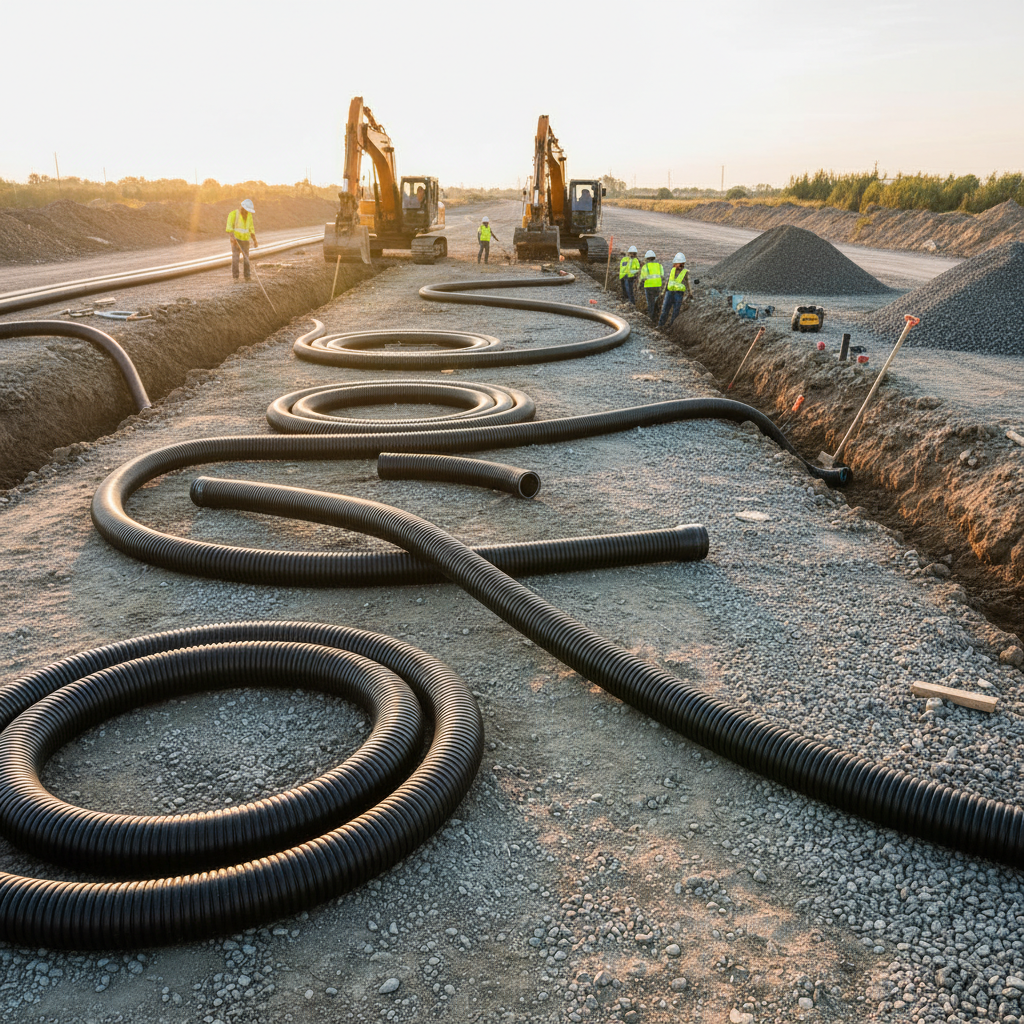
When selecting perforated pipes for your project, understanding the importance of pipe length and diameter is crucial for ensuring project efficiency. The HDPE pipes market is projected to reach $25.68 billion by 2029, highlighting a growing demand for high-density polyethylene solutions that are not only durable but also efficient in resource management. Properly sized pipes can significantly affect water flow rates and drainage efficiency, which are critical factors in project execution.
For instance, the market analysis indicates that HDPE pipes come in various diameters—from less than 500 mm to over 3000 mm. Each size serves different applications, and selecting the right diameter based on your project's specific needs can prevent costly oversizing or undersizing issues. Furthermore, length considerations are equally important; utilizing the appropriate pipe lengths minimizes joint connections, reducing installation time and potential leak points. This combination of correct diameter and length leads to enhanced performance and longevity of the piping system, ultimately contributing to the overall success of your project.
Evaluating Durability and Maintenance Needs in Perforated Pipe Selection
When selecting the best perforated pipe for your project, evaluating its durability and maintenance needs is crucial. According to a report by the American Society of Civil Engineers, the lifespan of perforated PVC pipes can exceed 50 years, provided they are installed correctly and maintained properly. This durability is key to ensuring long-term performance in drainage, leach field, and stormwater management applications. The resistance of the material to corrosion, as well as the resilience against environmental factors, significantly impacts its overall longevity.
Maintenance considerations also play a vital role in your selection process. Research indicates that perforated pipes with larger holes often allow for better sediment passage, which can reduce clogging and the need for frequent maintenance. However, it's important to balance this with the potential for reduced filtration efficiency. Industry standards suggest that selecting a pipe with the right hole size—typically between 3/16 inch and 1 inch—can optimize the drainage performance while minimizing sediment buildup, making the system more sustainable and cost-effective over time. Taking these factors into account will ensure a more efficient and hassle-free project outcome.