10 Essential Tips for Choosing the Right Land Drainage Pipe
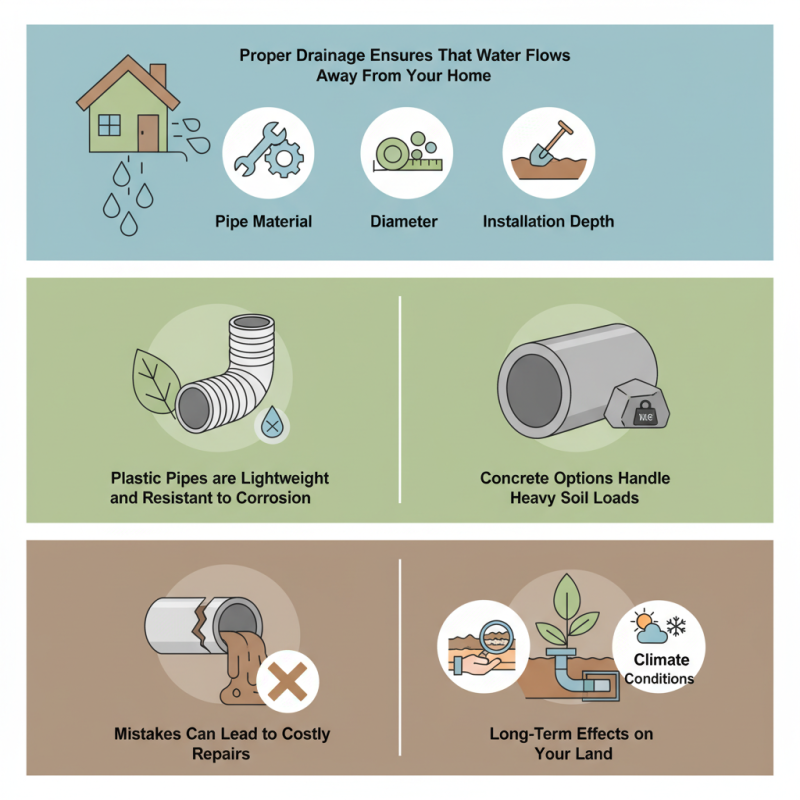
Choosing the right land drainage pipe can significantly impact your property's sustainability. Proper drainage ensures that water flows away from your home, preventing potential damage. With so many options available, it can be overwhelming to make a decision. The right pipe should effectively manage excess water while blending seamlessly with your landscape.
Consider factors like pipe material, diameter, and installation depth. Each choice can affect performance and durability. For example, plastic pipes are lightweight and resistant to corrosion. However, they may not handle heavy soil loads as well as concrete options. It’s essential to assess your specific drainage needs carefully.
Mistakes in selecting the wrong land drainage pipe can lead to costly repairs. Failing to account for soil type and climate conditions might cause overflow or blockages. Reflecting on these factors is crucial for success. Think carefully about your choices and their long-term effects on your land.
Understanding the Importance of Land Drainage Systems
Land drainage systems play a crucial role in maintaining soil health and agricultural productivity. According to the Food and Agriculture Organization (FAO), improper drainage can lead to soil salinity, reducing crop yields by as much as 20%. Effective land drainage helps manage excess water, preventing crop damage and enhancing soil fertility. In fact, a well-drained field can increase soil oxygen levels, promoting better root growth.
Choosing the right drainage pipe is essential. Not all pipes perform the same. Some materials may degrade over time, leading to costly repairs. A study from the Agricultural Research Service shows that using high-density polyethylene (HDPE) pipes can improve longevity and reduce maintenance needs. Yet, many landowners overlook the importance of proper installation or selection. There is a gap in awareness. This can lead to inefficient systems that fail to address waterlogging.
Soil type and local climate should guide decisions. Heavy clay soils may require different solutions than sandy soils. Often, landowners underestimate how drainage impacts overall agricultural sustainability. Seeking expert advice may seem daunting, but it is worthwhile. The initial investment in the right drainage solution pays off in improved crop health and yield.
10 Essential Tips for Choosing the Right Land Drainage Pipe - Understanding the Importance of Land Drainage Systems
| Tip Number |
Tip Description |
Importance |
Material Type |
| 1 |
Identify the specific drainage needs of your land. |
Essential for effective drainage. |
PVC, Polyethylene |
| 2 |
Choose the correct diameter for your pipes. |
Affects flow rate and system efficiency. |
PVC, Corrugated |
| 3 |
Evaluate the soil type in your area. |
Influences drainage capability. |
Clay, Sandy, Loamy |
| 4 |
Consider the slope of your land. |
Crucial for water flow. |
Not material-specific |
| 5 |
Research local drainage regulations. |
Compliance is necessary for projects. |
Not material-specific |
| 6 |
Check for potential obstructions in soil. |
Prevents future drainage issues. |
Not material-specific |
| 7 |
Choose between rigid and flexible pipes. |
Impacts installation and performance. |
PVC, Flexible Plastic |
| 8 |
Assess the durability of the materials. |
Ensures longevity of drainage system. |
HDPE, PVC |
| 9 |
Plan for maintenance and cleaning. |
Essential for uninterrupted drainage. |
Not material-specific |
| 10 |
Consult with a drainage expert. |
Provides tailored solutions for your needs. |
Not material-specific |
Types of Land Drainage Pipes and Their Applications
When choosing land drainage pipes, understanding the types available is crucial. The most common options include
PVC,
corrugated, and
concrete pipes. Each type has specific applications based on soil types, installation environments, and expected water flow.
For instance, PVC pipes are lightweight and resistant to corrosion, making them ideal for residential drainage systems.
In contrast, corrugated pipes are flexible, suitable for agricultural land where water needs to flow freely through various terrains.
Studies suggest that the correct choice can enhance drainage efficiency by up to 30%. Properly installed drainage systems prevent water accumulation, protecting structures and crops. Soil type significantly impacts the selection; sandy soils may need different pipes compared to clayey soils.
Improper selection can lead to inefficient drainage, higher maintenance costs, and potential crop damage.
Whether for home landscapes or large farmland, an informed choice is critical for sustainable water management.
Key Factors to Consider When Selecting Drainage Pipes
Choosing the right land drainage pipe requires careful consideration of key factors.
The type of soil plays a crucial role.
Clay soils retain water, making a perforated pipe useful.
Sandy soils, on the other hand, drain quickly and may require a different approach.
It's important to understand your landscape.
Next, consider the pipe's diameter.
Larger pipes can handle more water but may cost more.
A pipe that's too small can clog easily.
Think about how much water your system will need to manage.
Sometimes, oversizing can lead to unused capacity and wasted resources.
Another essential factor is durability.
Pipes made from different materials offer various lifespans.
Plastic pipes are often resistant to corrosion but can degrade under UV light.
Metal pipes might last longer but can rust.
Reflect on the environment where the pipes will be installed.
The right choice can make a significant difference in efficiency and longevity.
Common Mistakes to Avoid in Drainage Pipe Selection
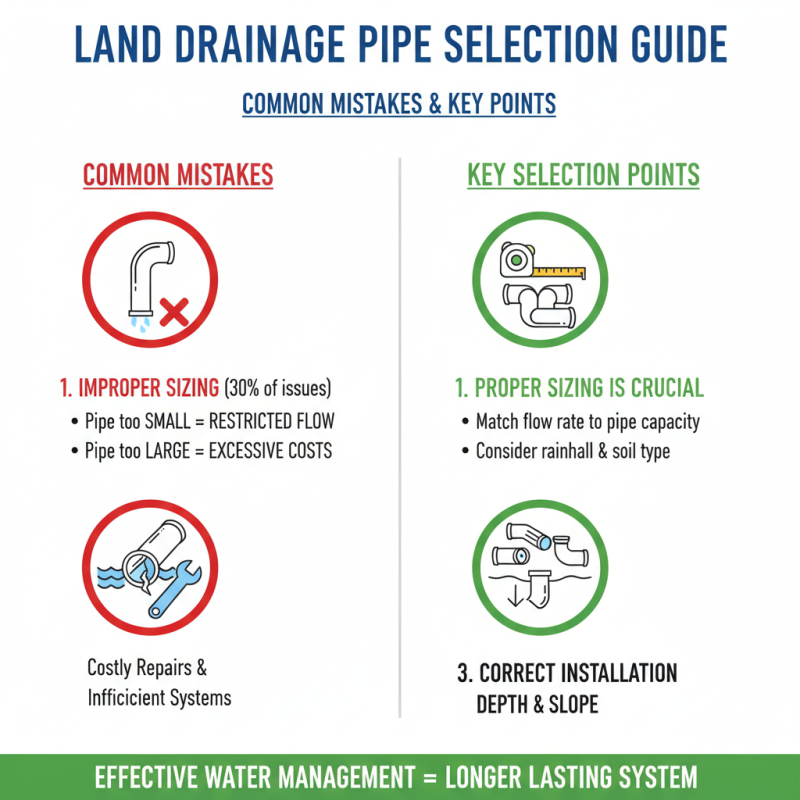
Choosing the right land drainage pipe is crucial for effective water management. Common mistakes can lead to costly repairs and inefficient systems. Many people overlook proper sizing. A pipe too small restricts flow. A pipe too large can lead to excessive costs. Data shows that around 30% of drainage issues stem from improper sizing, highlighting its importance.
Material selection often causes confusion. Some opt for cheap options without considering longevity. Pipe lifespan varies significantly. For instance, PVC pipes can last over 100 years, while metal alternatives may corrode quickly. Not accounting for local soil conditions can also lead to problems. Soil types affect water movement. If ignored, this can result in pipe failure.
Installation practices are another area of concern. Ensuring the correct slope is vital for maintaining flow. An incorrect slope can cause standing water, which is counterproductive. According to industry reports, poor installation practices contribute to nearly 40% of drainage system failures. Being aware of these common pitfalls can help in making better choices.
Maintenance Tips for Ensuring Effective Drainage Performance
Maintaining effective drainage performance requires careful attention to detail. Proper maintenance of land drainage pipes can significantly extend their lifespan. According to industry reports, nearly 30% of drainage issues stem from inadequate upkeep. Regular inspections and cleaning are crucial.
One tip is to clear debris from pipe openings. Clogs can disrupt water flow, leading to potential flooding. Consider using a simple tool to remove blockages. Regular checks should involve looking for sediment buildup, which can impede drainage.
Another essential aspect is monitoring the surrounding landscape. Soil erosion can directly affect drainage performance. If nearby vegetation grows too densely, it might obstruct drainage outlets. Pruning or relocating plants can help maintain a clear path for water.
It's vital to pay attention to changes in drainage efficiency. If water takes longer to drain, it may indicate underlying issues. Conduct routine assessments and document any discrepancies. Being proactive can save time and money in the long run.