Top 10 Applications of Motors You Should Know?
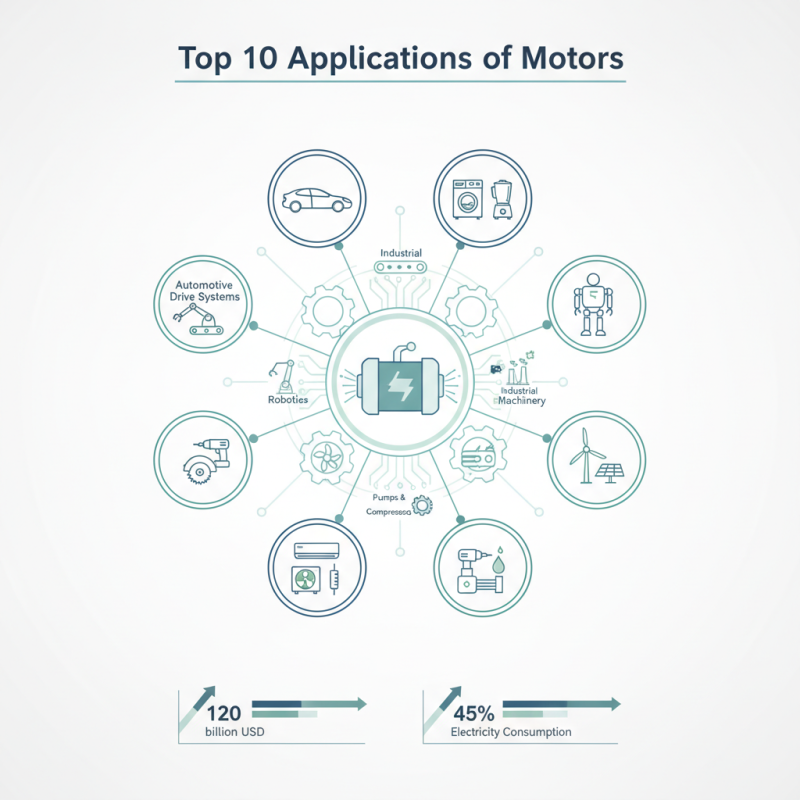
In today's industrial landscape, the application of motors spans numerous sectors, playing a vital role in our daily lives and global economy. According to a report by Market Research Future, the global motor market is projected to reach USD 120 billion by 2025. This growth highlights the increasing reliance on electric motors for efficiency and sustainability in various applications.
From automotive drive systems to home appliances, the versatility of motors is remarkable. The International Energy Agency states that electric motors consume about 45% of the world's electricity in industrial applications. This staggering figure underlines the importance of optimizing motor performance for energy savings. Yet, not all applications use motors efficiently. Some industries still rely on outdated technologies, leading to wasted energy and increased costs.
As innovations emerge, it's essential to stay informed about the top applications of motors. Understanding their diverse uses, from robotics to renewable energy, can help businesses and consumers make better choices. With the right insights, we can embrace a more efficient future, but there is much to improve on in execution and adaptation. The potential for progress is immense, but we must acknowledge existing challenges.
Applications of Motors in Industrial Automation: Efficiency Gains
In the realm of industrial automation, motors play a crucial role in improving efficiency. They drive various machinery, ensuring processes run smoothly. Consider conveyor systems in manufacturing plants. Here, motors provide consistent movement, significantly reducing operational delays. Without efficient motors, productivity would plummet.
Additionally, motors are central to robotics in the automation sector. They allow robots to perform tasks with precision. However, the quality of motors can vary. A poorly designed motor might lead to unexpected downtimes. Companies must assess motor specifications and performance data meticulously. This proactive approach can mitigate risks.
Energy consumption is another aspect worth contemplating. While modern motors are more efficient, older models may waste energy. This discrepancy impacts operational costs and the environment. It's vital for businesses to regularly evaluate their motor systems. Identifying inefficiencies encourages continuous improvement in industrial automation.
Electric Vehicle Motors: Transforming the Future of Transportation
Electric vehicle motors are changing transportation dramatically. According to a report by the International Energy Agency, the global electric vehicle stock reached 10 million in 2020, marking a 43% increase from the previous year. This surge highlights the growing reliance on electric motors across the automotive sector. The shift to electric motors is predicted to reduce greenhouse gas emissions significantly. In fact, the U.S. Department of Energy estimates that electric vehicles can cut emissions by up to 60% compared to traditional vehicles.
However, there are challenges to consider. Battery technology is still evolving. Range anxiety remains a concern for many users. As noted by the U.S. National Renewable Energy Laboratory, charging infrastructure is critical for the widespread adoption of electric vehicles. The ratio of charging stations to electric vehicles needs to grow significantly to keep pace with increasing demand.
Tip: For consumers, understanding their driving habits is essential. Assess daily mileage to determine whether an electric vehicle suits your lifestyle. Shifting perceptions about electric motors can help ease the transition. Awareness of advancements in battery life and charging technology can further enhance consumer confidence. Being informed leads to better choices about electric vehicles.
Home Appliances: The Silent Workhorses of Everyday Life
Home appliances play a vital role in our daily lives. They make tasks more manageable and save valuable time. On average, households now own 10 to 15 major appliances, contributing significantly to household energy consumption.
Consider refrigerators, which account for approximately 15% of a household’s energy use. Yet, many consumers overlook their efficiency ratings. Proper maintenance can enhance performance, but too often, appliances are neglected. This leads to unnecessary energy waste.
Washing machines are another critical appliance. They use around 10% of residential water. Many modern models offer eco-friendly settings, but not everyone is aware of these options. Limited knowledge can hinder their usage, adding to utility bills. Appliances often silently consume resources, leading to a reflective need for awareness in consumer habits.
Medical Equipment: Precision Motors for Life-saving Technologies
Precision motors play a crucial role in medical equipment. These tiny powerhouses drive life-saving technologies. From MRI machines to robotic surgical tools, they ensure accuracy and reliability. The right motor can enhance the performance of these devices. This precision impacts patient outcomes significantly.
In surgical environments, motors maneuver instruments with exceptional control. Surgeons depend on this reliability during intricate procedures. Yet, not all motors are created equal. Some may fail or underperform, risking patient safety. In this high-stakes field, quality is paramount.
Moreover, the development of these motors is ongoing. Researchers constantly seek innovations to improve efficiency. However, challenges persist. Balancing power, size, and cost remains complex. The need for robust testing in real-life scenarios can't be overlooked. This constant quest for improvement drives the medical technology field forward.
Top 10 Applications of Motors in Medical Equipment
Renewable Energy: Motors in Wind Turbines and Solar Applications
Motors play a crucial role in renewable energy, particularly in wind turbines and solar applications. In wind energy, they convert the kinetic energy of the wind into mechanical energy and eventually electricity. The Global Wind Energy Council reported that wind capacity reached 743 GW globally in 2020. This increase highlights the vital role of motors in harnessing wind power efficiently.
Solar applications also rely significantly on motors, particularly in solar tracking systems. These systems adjust the position of solar panels to maximize sun exposure. According to the International Renewable Energy Agency, solar power capacity exploded to 723 GW by the end of 2019, with motorized tracking enhancing efficiency by up to 25%.
Tips: Selecting the right motor is essential. Consider the torque and energy consumption for effective performance. Ensure regular maintenance to prevent inefficiencies. Regular checks on motor alignment and function can save costs in the long run. These aspects are often overlooked, yet they are crucial for optimal energy production.